Hiring Is a Process. Workforce Readiness Is a Strategy.
- Growmint Global
- Jun 23
- 3 min read

For years, organisations have approached hiring as a transactional activity.
A vacancy appears. A job description is created. Resumes are screened. Interviews are conducted. An offer is rolled out.
The position gets filled. Yet despite all this effort, many organisations continue to face the same challenges:
Long onboarding cycles
Productivity delays
Inconsistent performance
High managerial dependency
Early-stage attrition
Why?
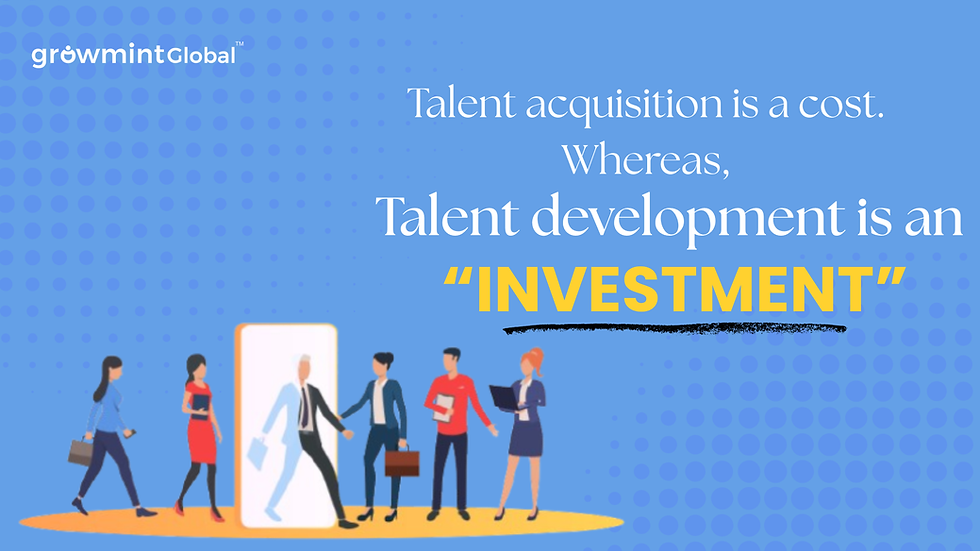
Because hiring people and building workforce capability are two very different things.
And that's where the concept of Structured Workforce Readiness is beginning to reshape how organisations think about talent.
Beyond Recruitment
Traditional hiring models focus on finding someone who can fill a role.
Structured Workforce Readiness focuses on preparing someone to succeed in that role.
It's the difference between asking:
"Who can occupy this position?" and asking:
"Who can contribute meaningfully to business outcomes from the earliest possible stage?"
The shift may seem subtle. But the business impact is significant. Organisations move from focusing on recruitment activity to workforce readiness.
From candidate availability to performance capability.
From hiring volume to business value.
The Readiness Gap Most hiring decisions are still based on qualifications, resumes, and interview performance.
While these indicators have value, they don't always predict workplace success.
As a result, organisations frequently encounter:
Extended ramp-up periods
Skill mismatches
Increased training requirements
Greater managerial intervention
Inconsistent execution
Higher hiring risk
In many cases, the candidate was successfully hired. But they weren't successfully prepared.
Engineering Workforce Readiness
Structured Workforce Engineering addresses this challenge through a deliberate, measurable approach.
Competency Mapping
Every role is broken down into the technical, professional, and behavioural competencies required for success.
This creates clarity around what high performance actually looks like.
Assessment-Based Evaluation
Candidates are measured against defined competencies rather than assumptions.
The goal is to reduce subjectivity and improve hiring accuracy. Candidates are measured against defined competencies rather than assumptions.
The goal is to reduce subjectivity and improve hiring accuracy.
Targeted Development
Skill gaps are identified and addressed through structured learning and practical exposure.
Preparation becomes intentional rather than reactive.
Capability Validation
Readiness is verified through assessments, simulations, projects, and performance-based evaluation.
Capability is demonstrated, not assumed.
Continuous Improvement Feedback loops allow organisations to continuously refine talent strategies based on real-world performance outcomes.
Why It Matters
Organisations that invest in workforce readiness often experience measurable business benefits:
Faster Productivity
Employees contribute sooner and require less time to become fully effective.
Reduced Managerial Burden
Managers spend less time teaching fundamentals and more time driving outcomes.
Better Hiring Decisions
Capability-based evaluation reduces uncertainty and lowers hiring risk.
Improved Employee Experience Prepared employees enter the workplace with greater confidence, engagement, and clarity.
Stronger Retention
When people are equipped to succeed, they are more likely to stay and grow.
Workforce Readiness as a Competitive Advantage
Products can be copied. Technology can be replicated. Processes can be optimized.
But a workforce that is systematically developed, validated, and aligned to business objectives remains one of the strongest competitive advantages an organization can build.
The question is no longer:
"How quickly can we hire?"
It's:
"How effectively can we build a workforce capable of delivering business outcomes?"
Final Thought
Organisations invest heavily in technology, infrastructure, and growth initiatives.
Yet the success of those investments ultimately depends on the people responsible for executing them.
Hiring fills positions.
Workforce readiness creates impact.
And as talent expectations continue to evolve, the organisations that treat workforce capability as a strategic asset—not just a recruitment requirement—will be the ones that scale more effectively.
At Growmint Global, this belief sits at the core of how we think about talent: not simply acquiring people, but helping organisations build workforce readiness that translates into measurable business value.
How is your organisation approaching workforce readiness today? Has hiring alone been enough, or are we entering an era where workforce engineering becomes a business necessity?


Comments